Teen Screen Time and Sleep: What Parents Should Actually Worry About
 By Hank Yang. Harvard Divinity School, MTS '26 · Founder of PhonePact · Built internet businesses reaching millionsUpdated July 2026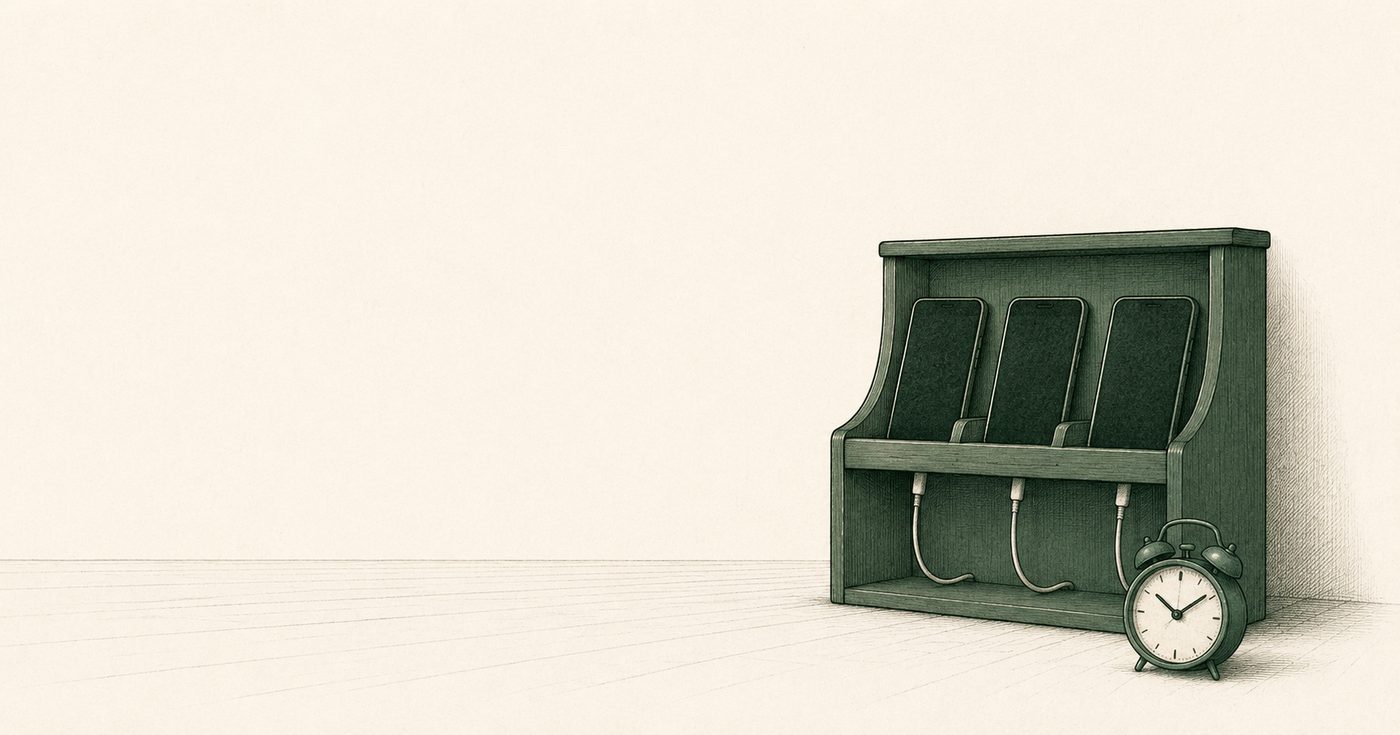
The short answer: the research points at three specific mechanisms, displacement (scrolling eats the sleep window), arousal (feeds and group chats keep the brain switched on past lights-out), and the bedroom phone itself (night wakings to check). Blue light is the mechanism parents fixate on and the least important of the four. The single highest-value protection: no phones in any bedroom overnight, enforced as a household custom.
Teen sleep is where screen worry stops being abstract. A teenager needs roughly 8 to 10 hours; surveys consistently find most get meaningfully less, and short sleep degrades exactly the things parents are already worried about: mood, attention, impulse control, and grades. Here's how screens actually take the hours, ranked by evidence, so your one intervention lands on the right mechanism.
How do screens actually steal teen sleep?
Mechanism one: displacement. The boring giant. Feeds are engineered with no endpoint, "one more" at 10:30 becomes 12:40, and every one of those minutes came directly out of the sleep budget, because school start times don't move. No neuroscience required: the phone doesn't have to affect sleep quality at all to devastate sleep quantity. Most of the damage is here.
Mechanism two: arousal. What teens do on phones at night is not relaxing. Group chat drama, competitive games, algorithmically escalating video, the social stakes of who-said-what: all of it activates exactly the alertness systems that need to power down. A wound-up brain at midnight takes longer to fall asleep even after the phone is finally down.
Mechanism three: the bedroom phone. A phone within reach overnight produces night checks, some teens wake to notifications or wake and check reflexively, fragmenting sleep even when total bedtime looked fine. Research across many studies consistently associates bedroom media access with shorter, worse sleep, and it's the mechanism a charging-station rule eliminates completely.
Mechanism four: blue light. Real but modest. Evening screen light can delay melatonin somewhat, and night-mode filters help somewhat. But a teen using a perfectly amber-tinted screen until 1am has solved the least of their four problems. Treat night mode as a garnish, not the meal.
What actually protects teen sleep?
The charging station, everyone's phones. One spot outside all bedrooms, landing at a set time, parents included. This single custom addresses displacement (the feed physically can't follow them to bed), arousal (a wind-down buffer opens up), and night checks (gone) at once. The parents-included clause is not decorative: a rule that binds only the teen is a punishment and gets appealed nightly; a household custom enforces itself. The full setup, including handling "I need my alarm," is in our bedtime guide.
A 30 to 60 minute runway. Phones land, lights go out later, and the gap holds something analog: shower, snack, paper book, music on a speaker. The runway is what lets the arousal mechanism unwind, and, parents report with some astonishment, it's often the best conversational window of the day.
Consistent-ish weekends. Teens' body clocks genuinely shift later at puberty (they're not lying about not being tired at 10), and weekend phone marathons that push sleep three hours later create Monday jet lag. Aim for weekend wake times within an hour or two of weekdays rather than fighting the biology head-on.
Negotiate the boundary with older teens, don't just impose it. Past fifteen or so, an imposed rule invites the workaround economy. A self-set phone-down time, supported by narrow duration-threshold check-ins rather than detailed activity reports, preserves the mechanism while granting the autonomy adolescence requires. That mutual, minimal-disclosure model is what we built PhonePact around, and sleep is where families among our early sign-ups say they want it first.
When is it more than a screens problem?
Talk to a pediatrician if sleep stays broken after the environment genuinely changes: persistent trouble falling asleep even without the phone, heavy daytime sleepiness despite adequate opportunity, loud snoring, or mood changes that outlast the sleep fix. Screens are the most common thief of teen sleep, but they're not the only one, and two weeks of a real charging-station routine is a fair trial that also gives the doctor useful information.
Questions people ask
How much does screen time actually affect teen sleep?
Substantially, mostly through displacement (endless feeds eating the sleep window) and pre-bed arousal, with bedroom phone access adding night wakings. Blue light contributes least of the four mechanisms despite getting the most attention.
Should teens have phones in their room at night?
The research consistently associates bedroom media access with shorter and worse sleep. A family charging station outside all bedrooms, parents' phones included, is the single most protective and most enforceable rule available.
Does night mode make it okay to use a phone before bed?
Night mode addresses only the light mechanism, which is the smallest one. An amber-tinted feed still displaces sleep hours and still winds the brain up. Useful garnish; not a solution.
What time should a teenager stop using their phone at night?
Work backward: 8 to 10 hours of sleep from their wake time gives lights-out, and phones should land 30 to 60 minutes before that. For older teens, a self-chosen phone-down time shared with the family holds far better than an imposed one.